Testing a Narrative-Driven Portfolio: My $100K Investopedia Experiment
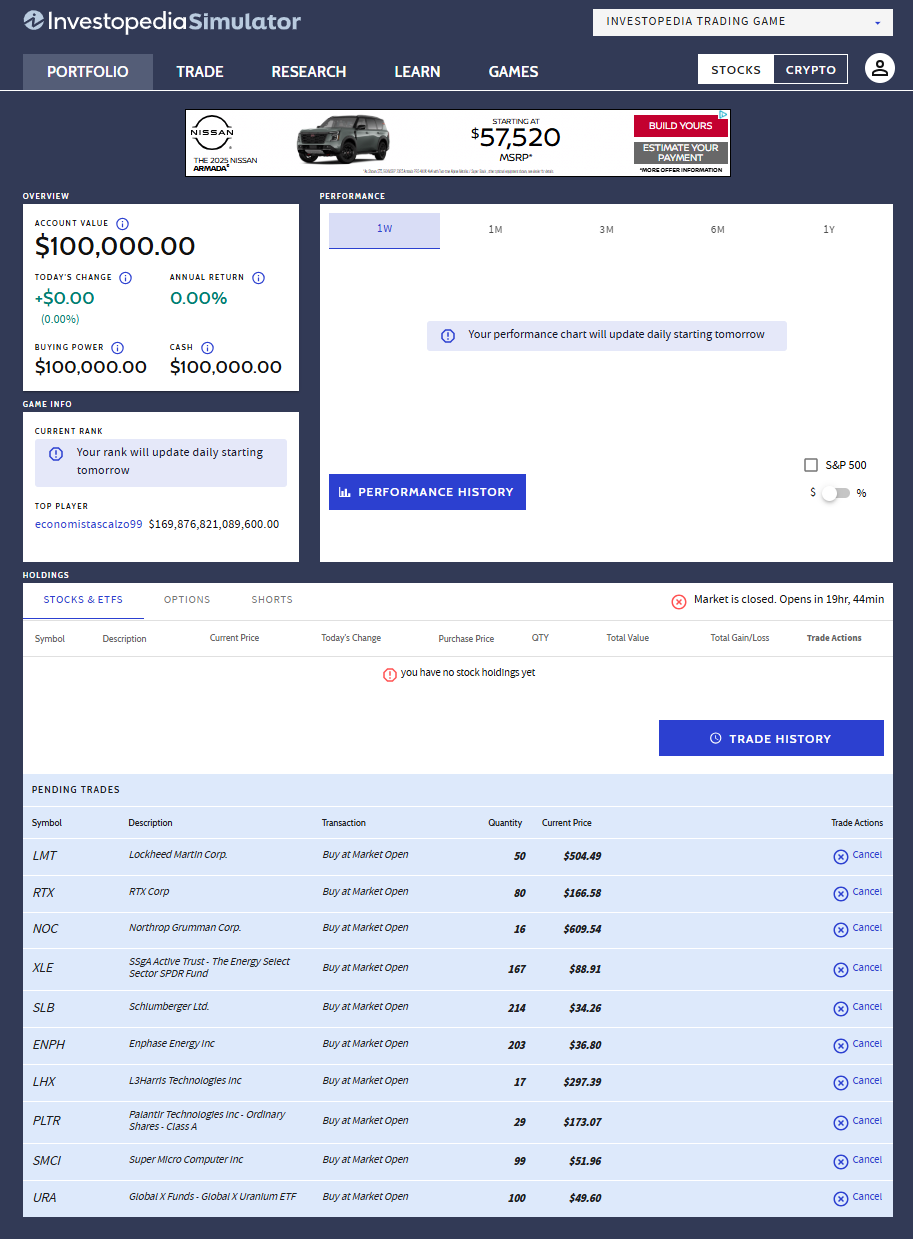
This month I’ve launched a $100,000 virtual portfolio on Investopedia to test the Reality Check Signal-to-Price Model—a system that looks for elite narrative convergence as a leading indicator of capital flow.
Trump is really going to attempt a 3 front war with Russia, Venezuela and Iran. In this economy?
— Stellar Man (@stellarman22) October 1, 2025
And Americans are going to be aiming weapons that will kill Russians in Russia and Ukraine will be pulling the trigger.
This is going to get really ugly for us here in the states. pic.twitter.com/6UVcGY0Fcq
The idea is simple: when governments, global institutions, and major media start speaking in sync about a theme, capital has already been quietly mobilized. Price is the last thing to move.
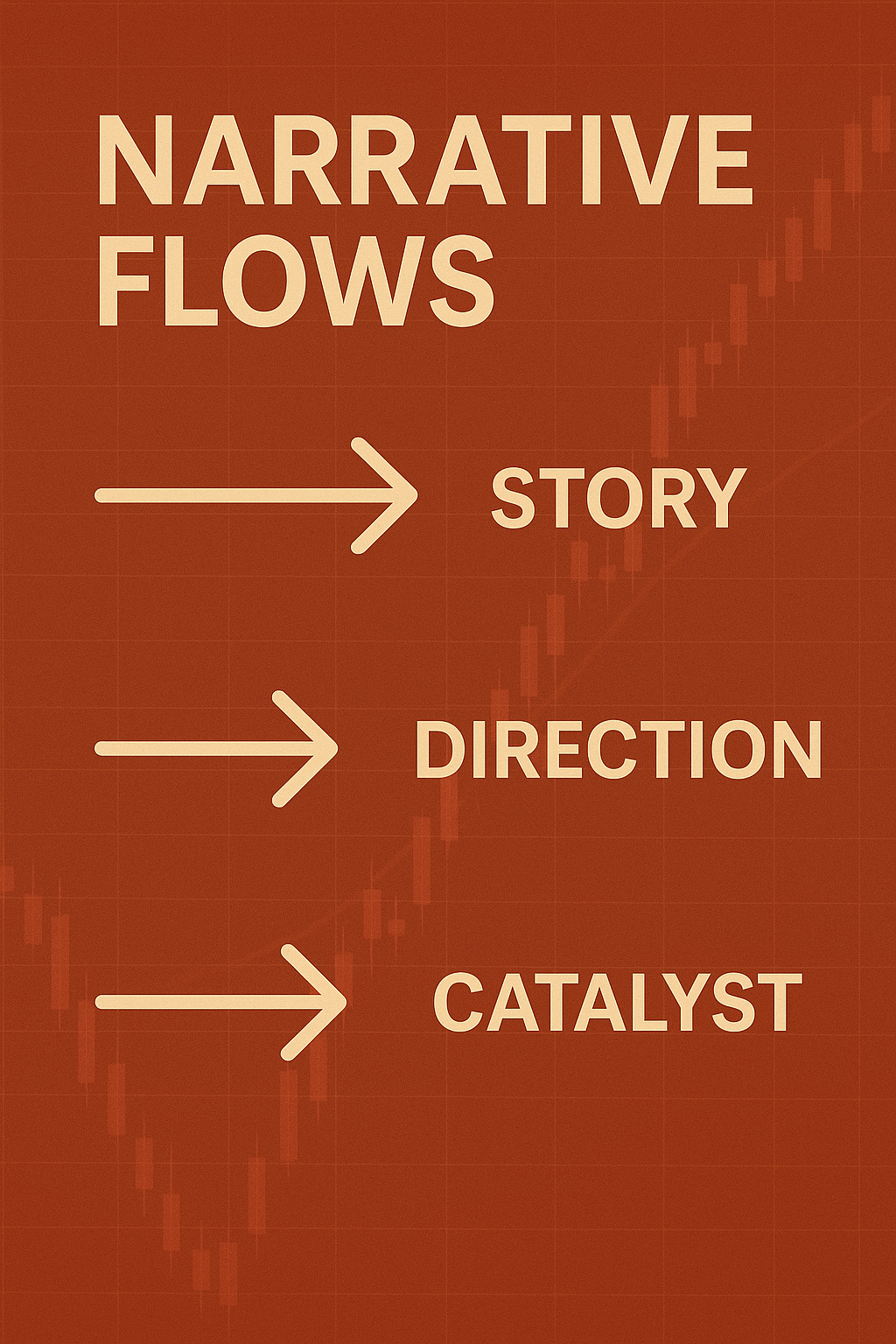
The Framework in Brief
- Narrative Mapping: track where policy, defense, and macro language begin to align.
- Signal Scoring: rate sectors by freshness and intensity of those signals.
- Position Sizing: overweight the narratives still building momentum, not the ones already celebrated.
- Review Cycle: re-score each week; trim when the story saturates headlines.
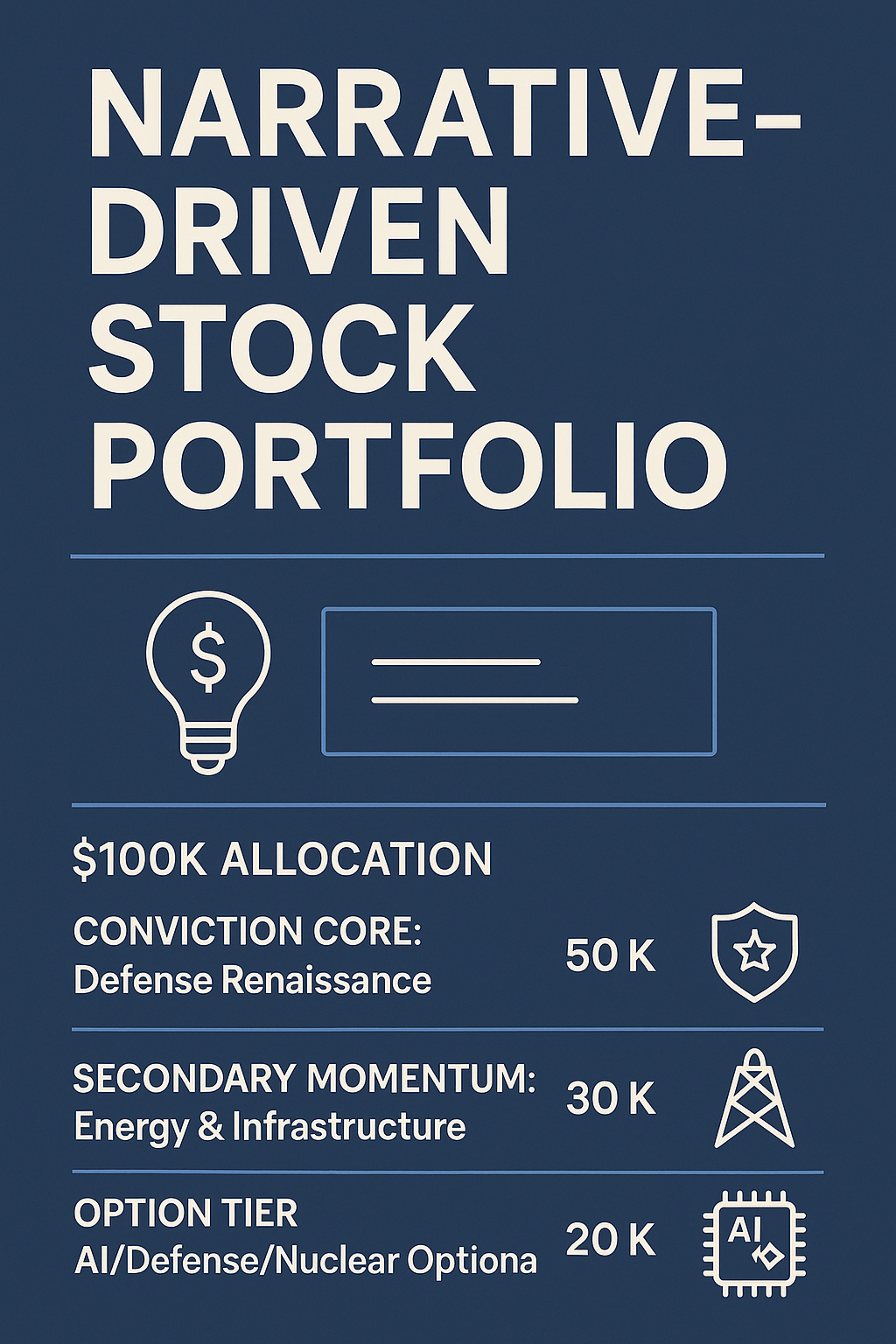
The $100K Allocation
| Layer | Allocation | Example Positions | Goal |
|---|---|---|---|
| Conviction Core – Defense Renaissance | $50 000 | LMT (25k) RTX (15k) NOC (10k) | Capture the clearest policy-backed capital flow: U.S. and allied rearmament. |
| Secondary Momentum – Energy & Infrastructure | $30 000 | XLE (15k) SLB (7.5k) ENPH (7.5k) | Play the energy-security and grid-modernization story that accompanies defense spending. |
| Option Tier – AI / Defense / Nuclear Optionality | $20 000 | LHX (5k) PLTR (5k) SMCI (5k) URA (5k) | Add asymmetric upside in emerging enforcement and tech narratives. |
1️⃣ Defense Core: LMT, RTX, NOC
Defense is the most explicit form of policy-driven demand on the planet.
Recent multi-billion-dollar contracts for F-35 production and missile-interceptor systems show that this isn’t rhetoric—it’s procurement.
- Lockheed Martin (LMT): flagship exposure to renewed defense budgets and international arms deals.
- Raytheon (RTX): missile-defense surge play; benefits from U.S. and NATO stockpile rebuilding.
- Northrop Grumman (NOC): quieter exposure to stealth and space systems—where the next policy wave is forming.
These are the “policy certainty” names. They move when the budget moves.
2️⃣ Energy and Infrastructure: XLE, SLB, ENPH
Every defense expansion runs on energy and logistics.
The broader narrative—energy security and re-industrialization—is spreading through global policy documents and conference agendas.
- XLE: the liquid macro proxy for oil majors; strong momentum on rate-cut expectations.
- Schlumberger (SLB): service-sector beneficiary of renewed drilling and infrastructure spending.
- Enphase (ENPH): clean-tech counterweight; positioned for grid-modernization incentives and battery subsidies.
This layer balances hard-energy realism with clean-energy optics, reflecting how both sides of the narrative advance together.
3️⃣ Optionality Layer: LHX, PLTR, SMCI, URA
This is the asymmetric slice—small weights, high potential.
- L3Harris (LHX): mid-cap defense-tech integrator; moves sharply on contract news.
- Palantir (PLTR): “AI for Defense” storyline; potential beneficiary of predictive-governance contracts.
- Super Micro Computer (SMCI): the hardware engine behind the AI arms race; tracks Nvidia’s institutional flow.
- Uranium ETF (URA): pure play on nuclear revival within the energy-security agenda.
Each sits on a narrative cusp: not yet over-owned, but rising in policy conversation frequency.
Early Hypothesis
If the model holds, returns should cluster around moments of policy acceleration—contract awards, budget releases, and coordinated media framing—rather than around earnings reports or retail momentum.
Success will confirm a simple but powerful thesis:
Markets follow policy.
Policy follows narrative.
Narrative follows alignment.
By quantifying that alignment, we may be able to see the next move—weeks before the charts do.
Disclaimer: This portfolio is a personal experiment using virtual capital. Nothing here is investment advice.