The Sterile Empire: How the West Was Talked Out of Babies and Into Open Borders
NOTE: YOU CAN'T SEE THE X POSTS I INSERT IF YOU READ THIS IN THE EMAIL.
You might’ve heard that the world is overpopulated. You probably haven’t heard who decided that—and what they did with the idea.
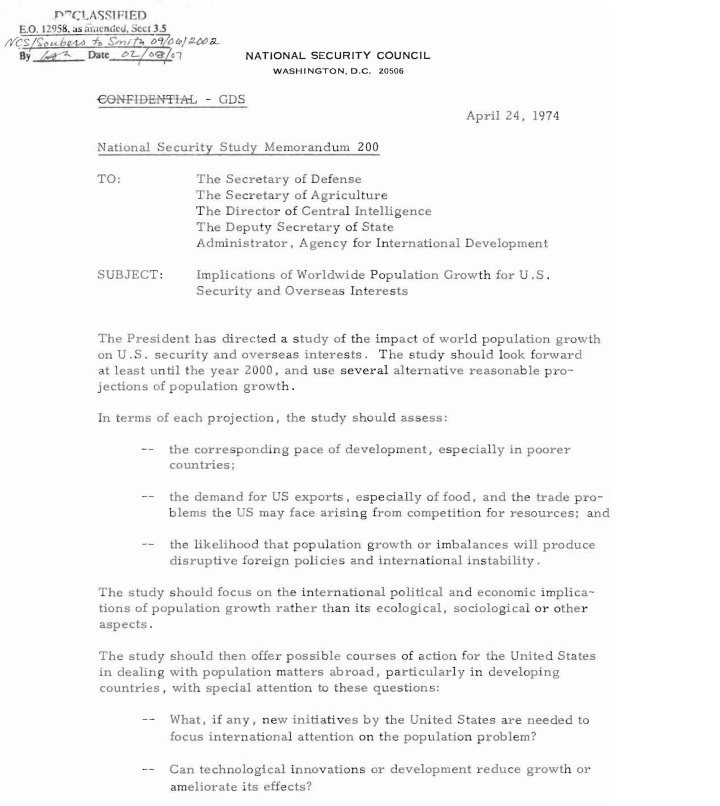
Before Western nations were talked out of babies, the U.S. government ran the experiment elsewhere. In 1974, a memo known as NSSM-200 declared global population growth—not war, not communism—the greatest threat to U.S. security. But the fix wasn’t military—it was fertility.
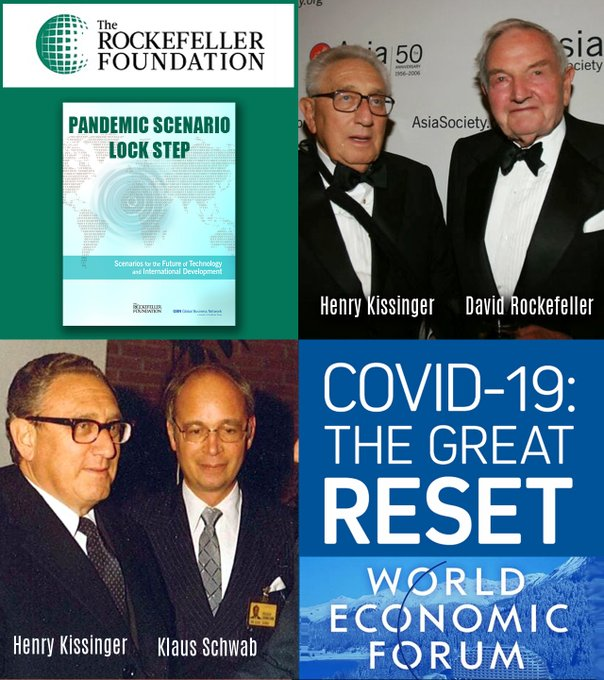
For nearly 50 years, Western societies have been gently (and not so gently) nudged toward one unspoken conclusion: fewer native babies is not just acceptable—it’s virtuous. That message didn’t come from a grassroots movement. It came from classified memos, elite think tanks, and a surprising number of billionaires who really want you to think globally, act sterilely.
Let’s rewind.
Act I: The Memo That Birthed the Modern Population Narrative
NSSM-200 Recommended Population Control Methods
| Method | Description | Strategic Purpose |
|---|---|---|
| Abortion Access | Promote legalization and funding where culturally viable | Rapid fertility reduction in targeted nations |
| Sterilization | Encourage permanent methods, especially in high-growth areas | Long-term control over population numbers |
| Contraception/IUDs | Mass distribution and education programs | Normalize fertility control without backlash |
| Delayed Marriage | Promote education and economic incentives for late marriage | Shortens reproductive window, lowers birth rates |
| Mass Media Campaigns | Use NGOs, film, and education to frame small families as ideal | Shift cultural norms without overt coercion |
These were not framed as moral questions—they were seen as tools to maintain access to resources and geopolitical leverage.
In 1974, the U.S. National Security Council produced a charming document known as NSSM-200, or more ominously, "The Kissinger Report." The memo’s thesis? Global population growth—especially in resource-rich developing countries—was a threat to U.S. national security.
Specifically, it argued that:
- Too many people in poor countries = instability
- Instability = bad for U.S. access to food, minerals, oil
- Therefore: slow their population growth, by any means necessary (preferably soft power, aid incentives, and media framing)
13 Target Countries of NSSM-200 and Key Resource Relevance
| Country | Region | Strategic Resource Interests |
| India | South Asia | Food supply, minerals |
| Bangladesh | South Asia | Fertile land, population density |
| Pakistan | South Asia | Political stability, cotton, minerals |
| Nigeria | West Africa | Oil, population growth |
| Mexico | Latin America | Oil, proximity to U.S., migration flows |
| Indonesia | Southeast Asia | Oil, tin, strategic shipping lanes |
| Brazil | South America | Agriculture, minerals, Amazon resources |
| Philippines | Southeast Asia | U.S. military bases, maritime location |
| Thailand | Southeast Asia | Rice exports, regional stability |
| Egypt | North Africa | Suez Canal, political influence |
| Turkey | Eurasia | Strategic NATO partner, regional buffer |
| Ethiopia | East Africa | Water resources (Nile), agriculture |
| Colombia | South America | Oil, drug trade routes, minerals |
This wasn't your average policy paper. It was classified until 1989. Once public, it became clear: population control wasn’t just a humanitarian project—it was geopolitical strategy.
Act II: Exported Policy, Imported Logic
While the memo targeted “Less Developed Countries” (LDCs), the logic didn’t stay offshore.
The same Rockefeller-linked institutions that funded sterilization campaigns in India and IUD drives in Africa also poured billions into:
- Sex ed programs in U.S. schools ("babies ruin your future")
- Environmental messaging that equated childbirth with planetary doom
- Feminist framing that turned family into a prison cell

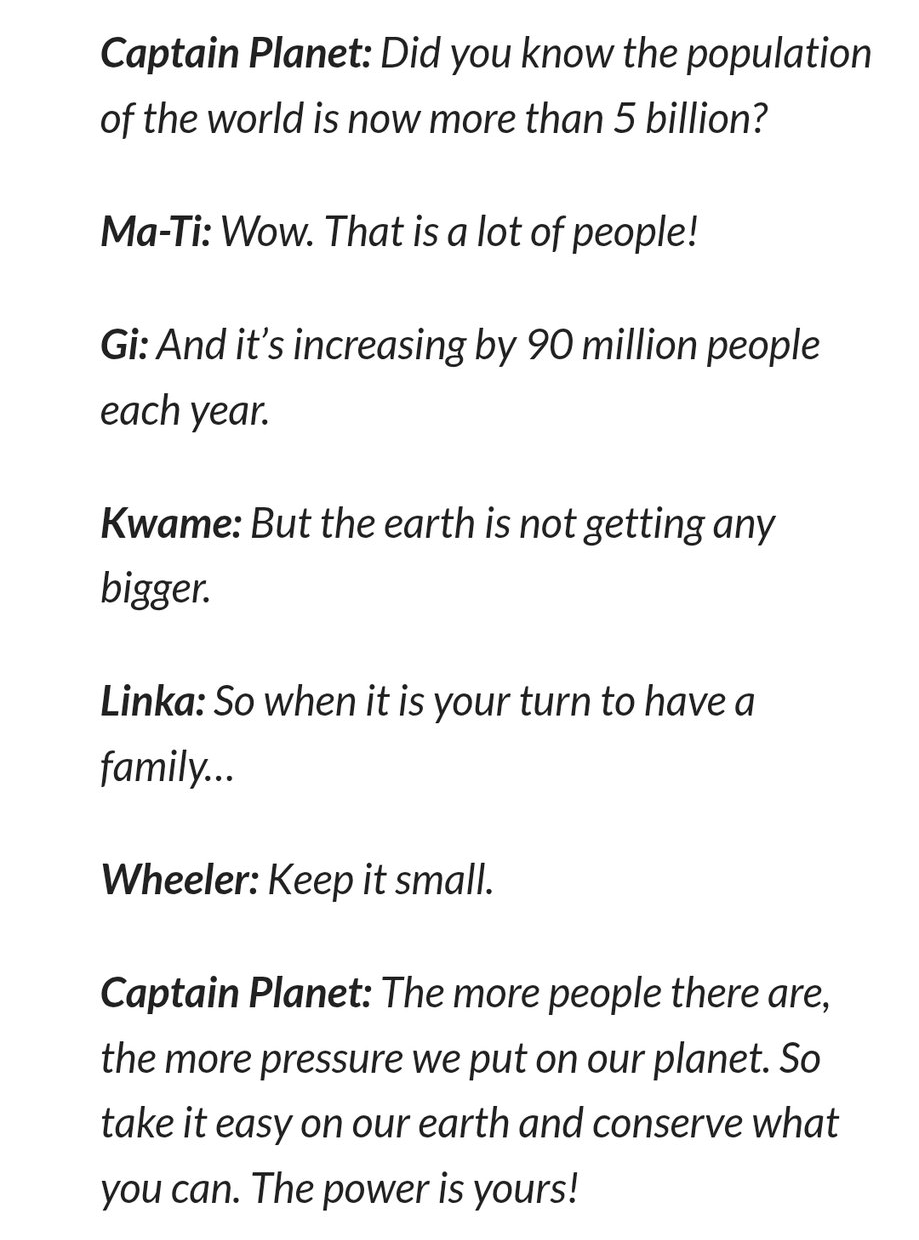
By the 1980s and 90s, the Western mind was marinated in subtle anti-natalism. Kids were expensive. The planet was dying. Better to travel, hustle, and maybe adopt a cat.
And it worked.
Total Fertility Rate (TFR), 1970–2020 (2.1 = replacement level)
| Year | U.S. TFR | Israel TFR | Europe TFR | Japan TFR |
| 1970 | 2.5 | 3.8 | 2.4 | 2.1 |
| 1980 | 1.8 | 3.3 | 1.8 | 1.7 |
| 1990 | 2.0 | 2.9 | 1.6 | 1.5 |
| 2000 | 2.1 | 2.9 | 1.5 | 1.4 |
| 2010 | 1.9 | 3.0 | 1.6 | 1.4 |
| 2020 | 1.6 | 3.1 | 1.5 | 1.3 |
The trend is clear: below-replacement fertility has become the norm across the developed world. The decline wasn’t organic—it was curated.
Western fertility plummeted below replacement. But instead of reversing course, the system doubled down—with a twist.
Act III: Enter Mass Immigration — The New Population Plan
Just as birth rates collapsed, elites began importing millions of migrants into the same societies they’d told to stop reproducing.
Governments say it's solving a humanitarian crisis and bringing in valuable workers. Critics called it incoherent. But from a structural lens, it made cold sense:
| Suppress Native Births | Import Labor and Dependents |
| Delays population power consolidation | Fragments cultural continuity |
| Avoids traditional resistance networks | Increases economic dependency |
| Weakens sovereign identity | Enables managerial class expansion |
⚡️BREAKING:
— S2FUncensored (@S2FUncensored) January 22, 2025
Over 1K migrants SURGE towards US southern border as Trump races to respond
According to reports, more than 1,000 migrants have allegedly forced their way through a Mexican blockade and are making their way toward the US. pic.twitter.com/CQqsZ5MqZb
President Trump just called out the UN for funding the invasion of America's southern border:
— Greg Price (@greg_price11) September 23, 2025
"In 2024, the UN budgeted $372M in cash assistance to support migrants journeying into the United States... The UN also provided food, shelter, transportation and debit cards to illegal… pic.twitter.com/HVo1GCTOvB
Illegal migrant activists clash with riot police in LA, after holding a protest and blocking a freeway in protest against Trump’s deportation plan.
— Oli London (@OliLondonTV) February 4, 2025
pic.twitter.com/Jxlr691F85
Act IV: So Why Would They Do This?
This isn’t incompetence. It’s design.
A world of low-fertility, high-dependency populations is easier to manage:
- Less resistance, more compliance
- No legacy networks to defend
- Every generation more malleable than the last
Mass immigration fills labor gaps created by fertility suppression, creating a loop that looks like chaos but functions as control.
And as demographic balances shift, so too does political power. Entire regions can be electorally reshaped by changing populations. What looks like democracy is now demographic rigging.
It’s not a conspiracy, it’s demographic engineering, wrapped in humanitarian ribbon, enforced by social shame, and funded by the same institutions that made NSSM-200 possible.

BONUS: If you think immigration is really about helping economic migrants, you MUST watch this short video:
Yep
— Ted Nugent (@TedNugent) August 26, 2025
-
-
Repost: @numbersusa
The most important immigration video you’ll ever see. Immigration simplified - using only gumballs. #immigration #gumballs #numbersusa #migrants pic.twitter.com/5kI53I5Zrs
Comments welcome.